Baby cry detection apps: how they work and what parents should know
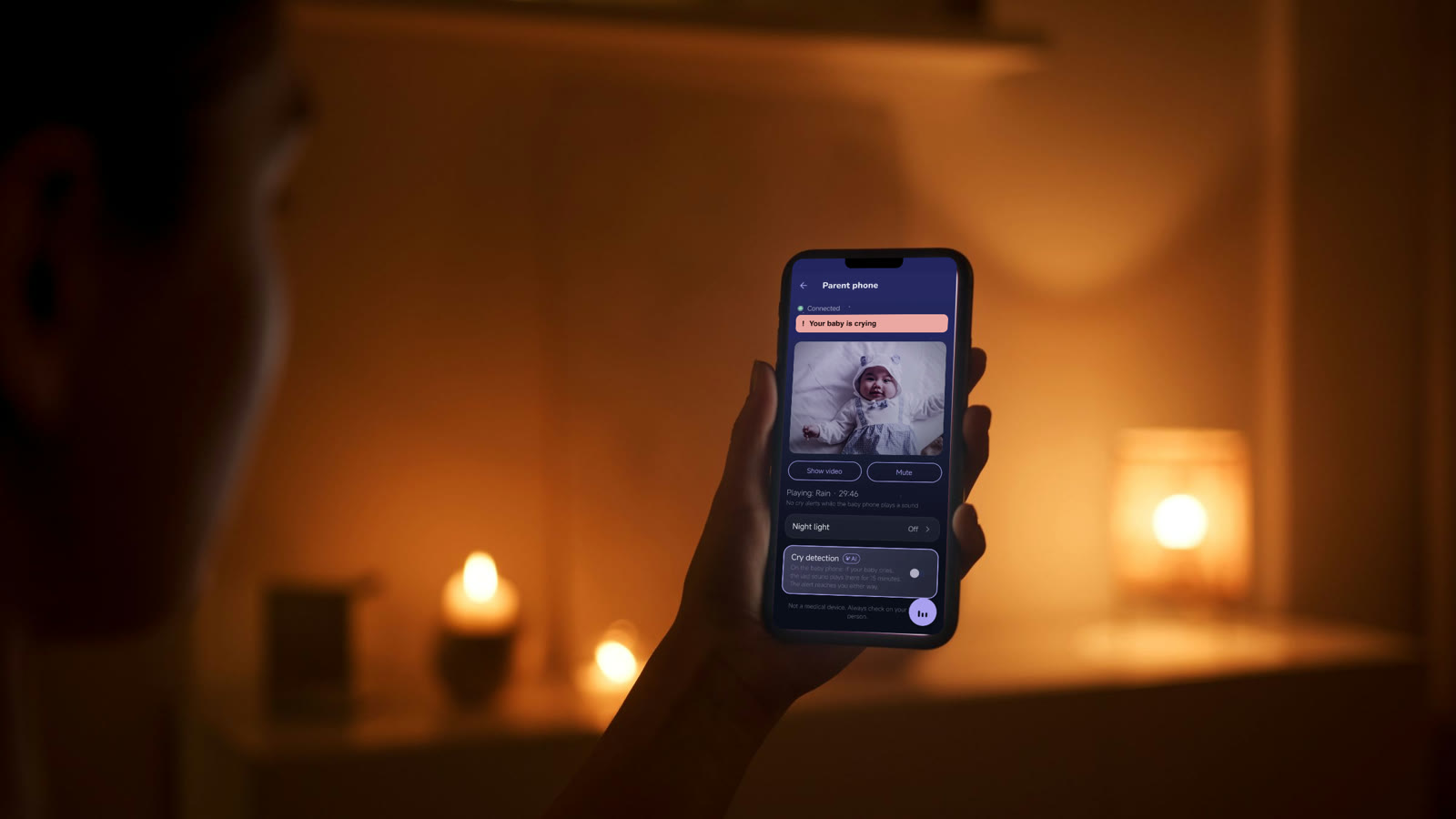
A cry detection app listens through a phone's microphone and reacts when it hears a baby crying: it sends an alert to your phone, plays a soothing sound again, or notes the time. Simple apps react to any loud sound. Better ones use a small AI model trained on thousands of recorded sounds, which can tell crying from a barking dog or a slammed door. None of them can tell you why your baby cries or whether your baby is safe.
What cry detection apps do
Most apps do one or more of these three things when they hear crying:
- Alert you on another phone. The phone in the baby's room listens, and your phone vibrates or rings. This is a baby monitor with an alert on top. (How to set up two phones is in How to turn your phone into a baby monitor.)
- Soothe on their own. The phone plays white noise or a lullaby again, often enough for a baby who stirs between sleep cycles to settle without anyone going in.
- Keep a record. When and how often your baby woke, so you can see a pattern over the week.
How an app recognizes crying
Simple apps: anything loud
The simplest apps only notice that the room got loud. They hear almost every cry, but they also go off for the dog, a door, the TV, a car outside or someone talking in the hallway. Make them less sensitive and they miss soft crying; make them more sensitive and everyday sounds set them off.
Smarter apps: they know what crying sounds like
Better apps use artificial intelligence that has learned from many recordings what a baby's cry sounds like, and how it differs from talking, music, a barking dog or a vacuum cleaner. They listen for a moment before they react, so a single squeak or a cough does not count. This kind of AI is now small enough to run on an ordinary phone.
On your phone, or on the app maker's computers
Some apps send what the microphone hears over the internet to the app maker's computers and decide there. Others decide on the phone itself. On the phone is better for a baby's room: the sound never leaves your home, it works without internet, and there is no wait. Before you install an app, check its privacy policy for whether sound is uploaded or recorded.
How well does it work?
A good app hears real crying well and is rarely fooled by everyday sounds, much less often than an app that only reacts to loudness. But no app is perfect. A real nursery has distance, echo, other sounds and a baby who whimpers rather than cries. Try it in your own room before you rely on it, and expect a missed cry or a false alert now and then.
The limits to know
- Soft and distant crying. A whimper across a large room may not be noticed. Most apps have a sensitivity setting: higher hears more, but also reacts to more things that are not crying.
- White noise covers crying. Loud white noise can drown out a cry, for the app just as for you. An app that plays a sound and listens at the same time mostly hears itself. Nanabee Sleep therefore listens while its sound is off, for example after the timer has faded it out.
- It cannot tell whose cry it is. An older sibling, a crying baby on TV or a video on someone's phone can set it off too.
- A few seconds of delay. The app listens for a moment to be sure before it reacts, and usually waits a little before it reacts again.
- It does not know why. Some apps promise to tell hunger from tiredness or pain by the sound of the cry. Treat that with care: you know your baby better than an app does, and Nanabee does not try.
- It is not a medical device. Cry detection hears crying and nothing else. It does not watch breathing, and a baby in trouble may be quiet. It does not replace safe sleep or checking on your baby.
What to look for in a cry detection app
- Runs on the phone and never records or uploads the sound from the microphone.
- Works with the screen locked, all night, without the system closing it.
- Recognizes crying, not only loudness, and has a sensitivity setting.
- Does something useful when it hears crying: alerts your phone, plays the sound again, or both.
- Warns you when the link breaks, if it uses two phones. Silence from a monitor should never mean "connection lost".
- Works offline, so a Wi-Fi or internet outage does not turn it off.
Cry detection in Nanabee Sleep
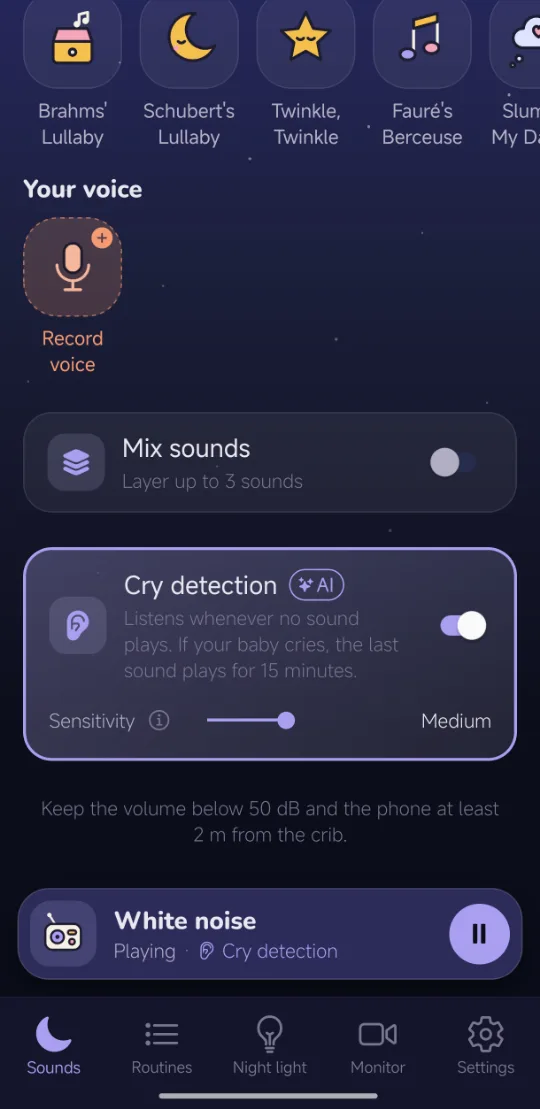
Nanabee Sleep listens for crying on the phone itself, also with the screen locked and without internet. What the microphone hears is never recorded, stored or sent anywhere. You choose one of three sensitivities. It works in two ways:
- On one phone: when the sound has stopped, the app keeps listening. When your baby cries, it plays the last sound again for 15 minutes, and the history shows how often that happened during the night.
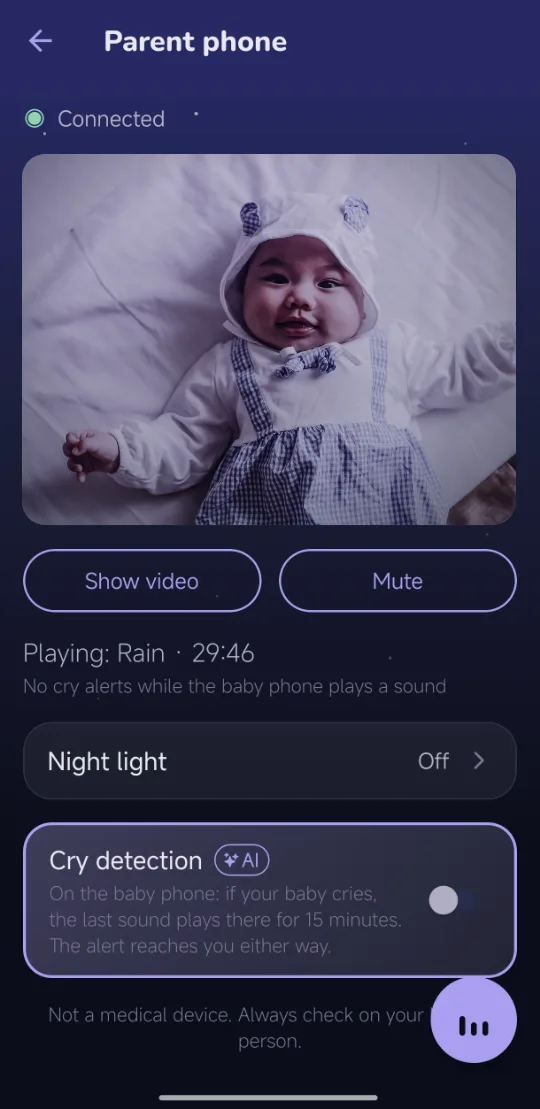
- With two phones as a baby monitor: the detection runs on the baby phone, next to your baby. When it hears crying, your phone vibrates, shows a banner and turns on the video for a minute, and if you like, the baby phone plays its sound again.
Cry detection is part of Nanabee Sleep Pro, which you can try free for 14 days without a card.
Questions
Does a cry detection app record my baby?
It depends on the app. Some send the sound over the internet to the app maker. Apps that listen on the phone itself, like Nanabee Sleep, work without recording or sending anything. The privacy policy should say which it is.
Will it go off when an older sibling cries?
Most likely yes. The app hears crying, not a particular child. If a sibling sleeps in the same room, expect some alerts that are not for the baby.
Can I use cry detection together with white noise?
Yes, one after the other. Let the white noise play while your baby falls asleep and fade out with a timer; then the app listens in the quiet room and plays it again when your baby wakes up crying.
This guide is general information, not medical advice. Nanabee Sleep is not a medical device and does not replace watching your baby.